
Case Study: Massage Therapy for Complex Post-Surgical Knee Recovery
Client Presentation (Subjective) The client presented to my clinic seven months after undergoing a Total Knee Arthroplasty (TKA). Their recovery had been delayed by significant post-surgical complications, including a deep vein thrombosis (DVT) and Complex Regional Pain Syndrome (CRPS). Additionally, the client developed arthrofibrosis (severe joint stiffness). While a Manipulation Under Anesthesia (MUA) demonstrated that the knee joint itself was capable of full mobility, the stiffness and pain immediately returned once the client was awake. The client was experiencing chronic knee pain and was receiving concurrent physical therapy.
Assessment Findings (Objective) Upon initial assessment, the client relied on two forearm crutches and exhibited a severely compromised gait.
Range of Motion (ROM): Knee mobility was significantly restricted, limited to 75 degrees of flexion and lacking 15-20 degrees of full extension.
Observation: Visual inspection of the knee revealed light-to-moderate edema (swelling) and a shiny pallor to the skin, which is a common presentation in clients with a history of CRPS.
Palpation: The tissue surrounding the knee and the quadriceps femoris was severely tender to the touch. Additionally, the natural gliding movement of the patella (kneecap) was profoundly limited.
Clinical Impression While the client's medical diagnoses were managed by their physician, my assessment as a massage therapist indicated profound myofascial restrictions and hypertonicity in the quadriceps and peripatellar (around the kneecap) tissues. The nervous system was also highly sensitized due to the history of CRPS. The inability of the patella to glide freely, combined with the soft tissue tension, were primary contributors to the client's restricted range of motion and compromised gait.
Treatment Approach I worked with this client on a near-weekly basis for 16 months, adapting the treatment plan as their tissue health and nervous system tolerance improved.
Phase 1: Desensitization & Edema Management (Weeks 1-4): Early sessions focused on gentle Soft Tissue Mobilization (STM) and Manual Lymphatic Drainage (MLD) to address the swelling. Because the tissue was highly sensitized, I utilized "ladder of engagement" principles—gradually and safely introducing touch to calm the nervous system. I also applied targeted deep friction techniques around the extensor retinaculum and patella to encourage mobility.
Phase 2: Active Tissue Mobilization (Months 2-8): As the soft tissue normalized and became more pliable, I integrated active movement techniques. This involved pinning restricted tissues while the client actively moved their leg against light resistance, helping to restore functional glide between the muscle layers.
Phase 3: Functional Integration & Gait Assessment (Months 9-16): To prevent regression and address the sensitized nervous system, I incorporated adjunctive mirror therapy and focal vibration. We shifted our goals from strictly measuring joint angles to focusing on functional movement. Utilizing my certification in Functional Gait Assessment, I performed dynamic evaluations of the client's gait on a treadmill. We used mirrors for visual feedback to identify biomechanical deviations and help the client develop a more efficient, limp-free walking pattern. We also brainstormed and practiced safe movement strategies for getting up and down from the floor.
Outcomes The client's dedication to the process yielded remarkable, life-changing results over the course of our work together:
Early Wins: By week two, the client transitioned from using two crutches to just one. By week four, they were walking without crutches entirely.
Mid-Term Progress: By the six-month mark, the client’s pain and mobility had improved enough that they were able to return to hobbies such as going fishing for hours at a time.
Long-Term Success: By 11 months, the client was walking for 25 minutes on a treadmill (incorporating self-massage breaks for addressing stiff tissue) and tolerating regular three-hour flights to assist with childcare of his granddaughter.
Discharge/Maintenance (16 Months): The client successfully returned to cleaning, housework, going to the gym, and playing tennis. They developed a safe strategy for getting on the floor to play with their grandchild. While they maintain a slightly modified gait, it is highly efficient, safe, and supports a pain-free, active lifestyle.
Utilizing a treadmill for gait evaluation, endurance testing and test, treat, re-test method of hands on work.
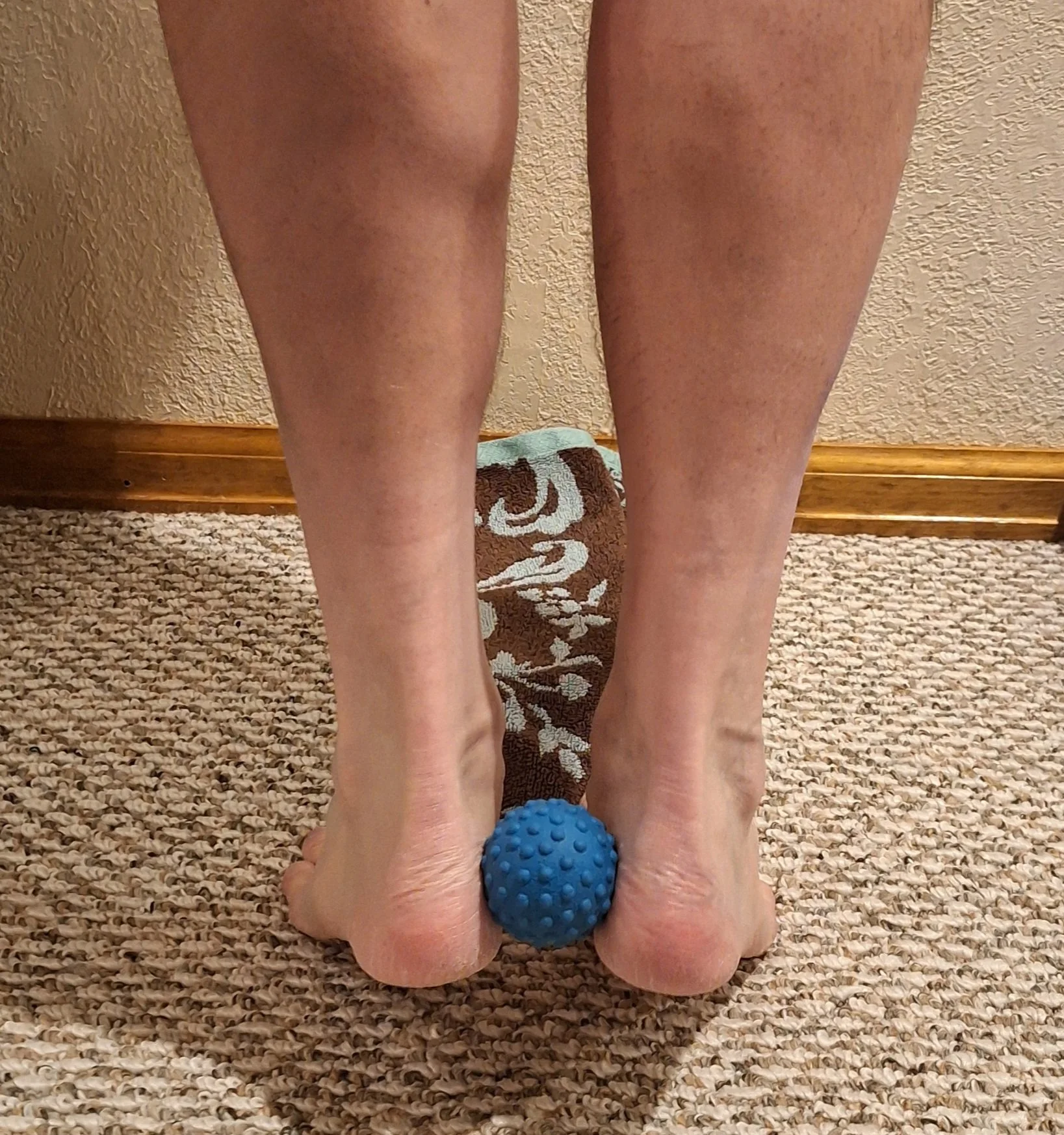
Atrophy is present in the right calf, so we implemented calf raises for strengthening, capitalizing on good foot function by the client.
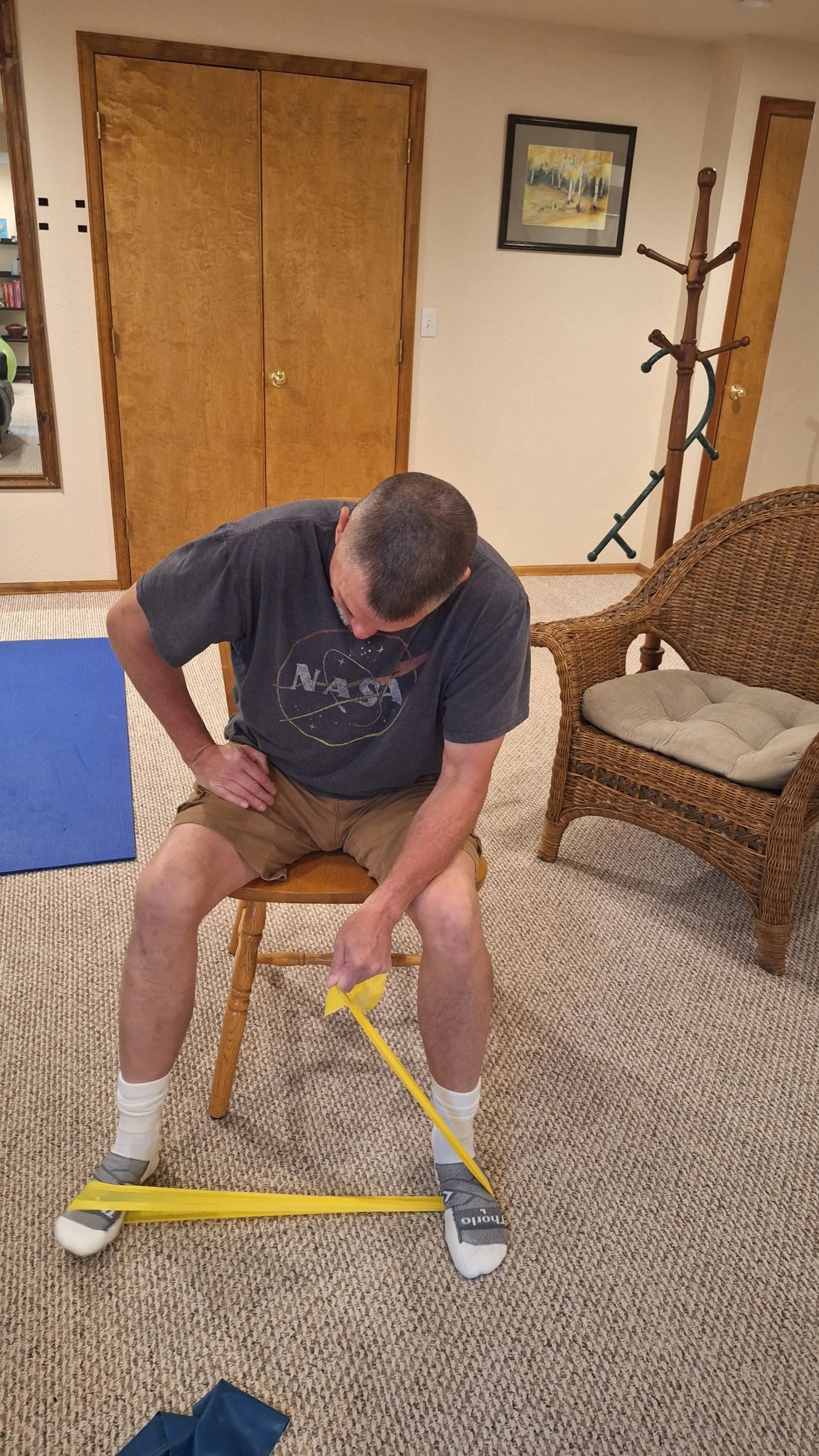
Utilizing theraband for various home exercises while away from my office for self-care and continued improvement