
Case Study: Adapting Treatment for Acute Soft Tissue Trauma
The Presentation (Subjective) A regular client presented for their scheduled massage appointment with a chief complaint of severe bruising and mild pain in their upper arm. The client noted that the pain felt "very deep into the soft tissue." The injury occurred a few days prior, caused by the recoil of shooting a shotgun at a skeet and trap range.
The Assessment (Objective)
Observation: Visual and palpatory assessment revealed severe discoloration (bruising) and localized swelling at the site of impact on the upper arm.
Function & Mobility: Despite the dramatic visual presentation, the client's muscular function and range of motion were completely normal and pain-free, indicating that the underlying contractile tissues (muscles and tendons) were likely not severely compromised.
Clinical Impression: Findings were consistent with an acute soft tissue contusion (bruise) in the inflammatory phase of healing.
The Approach (Plan & Clinical Reasoning)
Safety Parameters: According to clinical safety guidelines for acute trauma, direct deep pressure or traditional massage compression over a severe bruise is strictly contraindicated.
Targeted Interventions (Manual Lymphatic Drainage): To safely and effectively address the severe swelling and cellular waste, I utilized an advanced systematic Manual Lymphatic Drainage (MLD) protocol.
System Preparation: Before addressing the arm, the treatment began by preparing the entire lymphatic system. This involved clearing the central lymphatic watersheds—starting with the neck and terminus, and progressing to the axillary, abdominal, and groin lymph nodes. This crucial step primes the anastomoses and creates a pressure gradient to allow fluid to flow freely.
Clearing the Injury Site: Once the proximal pathways were cleared, I applied specific MLD techniques directly to the affected limb. By using very light, rhythmic, skin-stretching strokes, I was able to move the excess fluid and damaged cells directly out of the congested area and sweep it back toward the heart, all without compressing or further irritating the underlying damaged tissue.
Client Education & Home Care Because this client typically receives full-body sessions with deep, specialized focus on problem areas, a radical shift in approach was required. I explained that MLD is a "feather-light" technique; while it might feel like less physical work is being done, it is the most effective and appropriate intervention for this specific stage of healing.
To support the session, I instructed the client to elevate their arm above their heart at home to allow gravity to assist in draining the fluid. Ice was recommended only as an option for comfort. To objectively track our progress, we took a "before" photo and the client agreed to take follow-up photos every 12 hours for the next 3 days.
The Outcome & Clinical Observations The resulting photo essay (see images) clearly tells the story of the treatment's success.
One of the greatest benefits of MLD is that a single treatment effectively "jump-starts" the lymphatic system. The movement of fluid away from the damaged site typically continues for up to 72 hours, meaning the therapy continues to work long after the client leaves the office. As hoped, the bruising and swelling resolved rapidly, and the client was thrilled with the accelerated recovery.
Broader Clinical Applications While this case highlights success with a blunt-force recreational injury, MLD is a highly versatile technique. I frequently implement these same protocols to manage severe edema, swelling, and inflammation associated with post-surgical recovery (such as total knee replacements) and other acute injuries, helping clients navigate their healing process safely and efficiently.
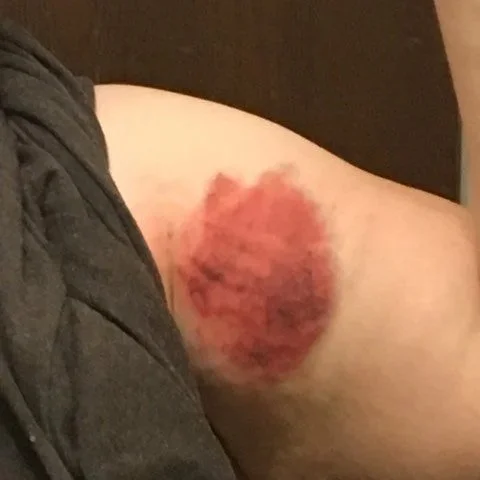
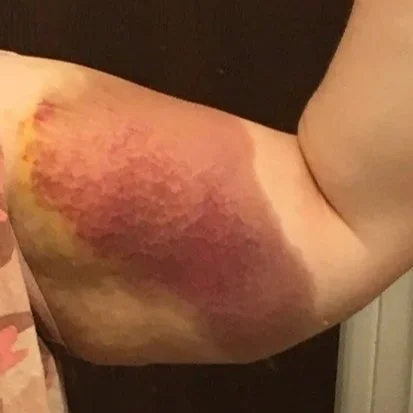
Initial injury
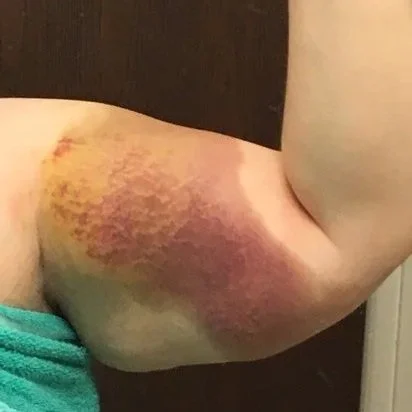
Before Lymph Drainage
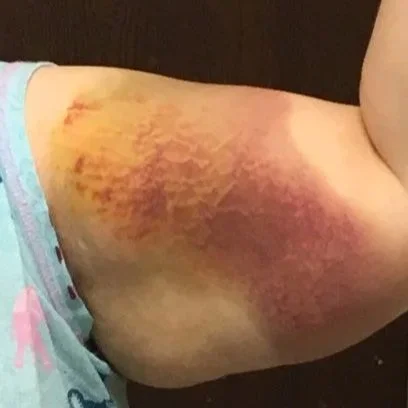
12 hours post treatment
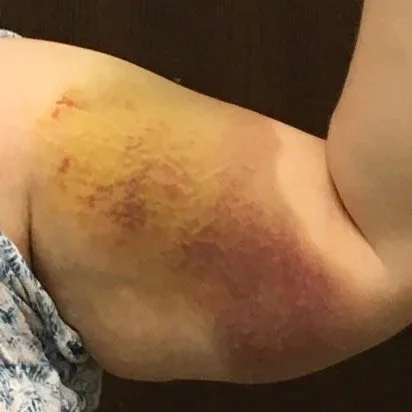
24 hours post treatment
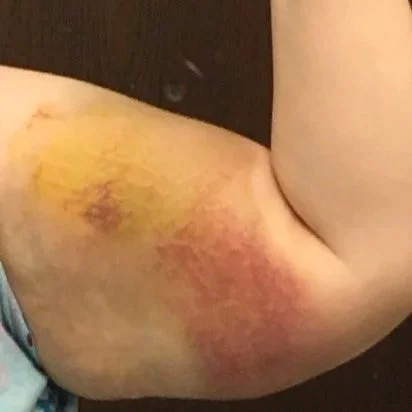
36 hours post treatment
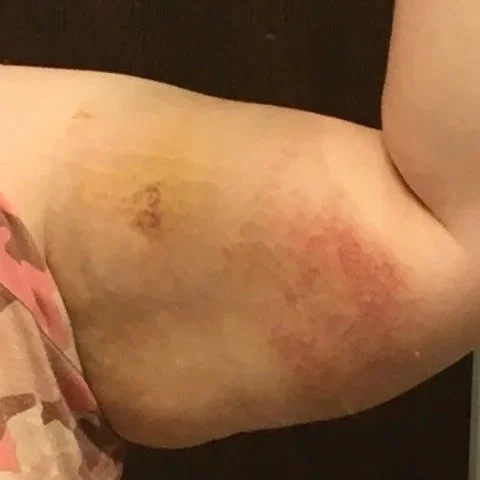
48 hours post treatment
72 hours post treatment